Tips and stories
How to train a dog for truffles (a beginner's guide)
The key steps in training a dog for truffles — from getting to know the scent to working outdoors, plus the most common mistakes and tips for success.
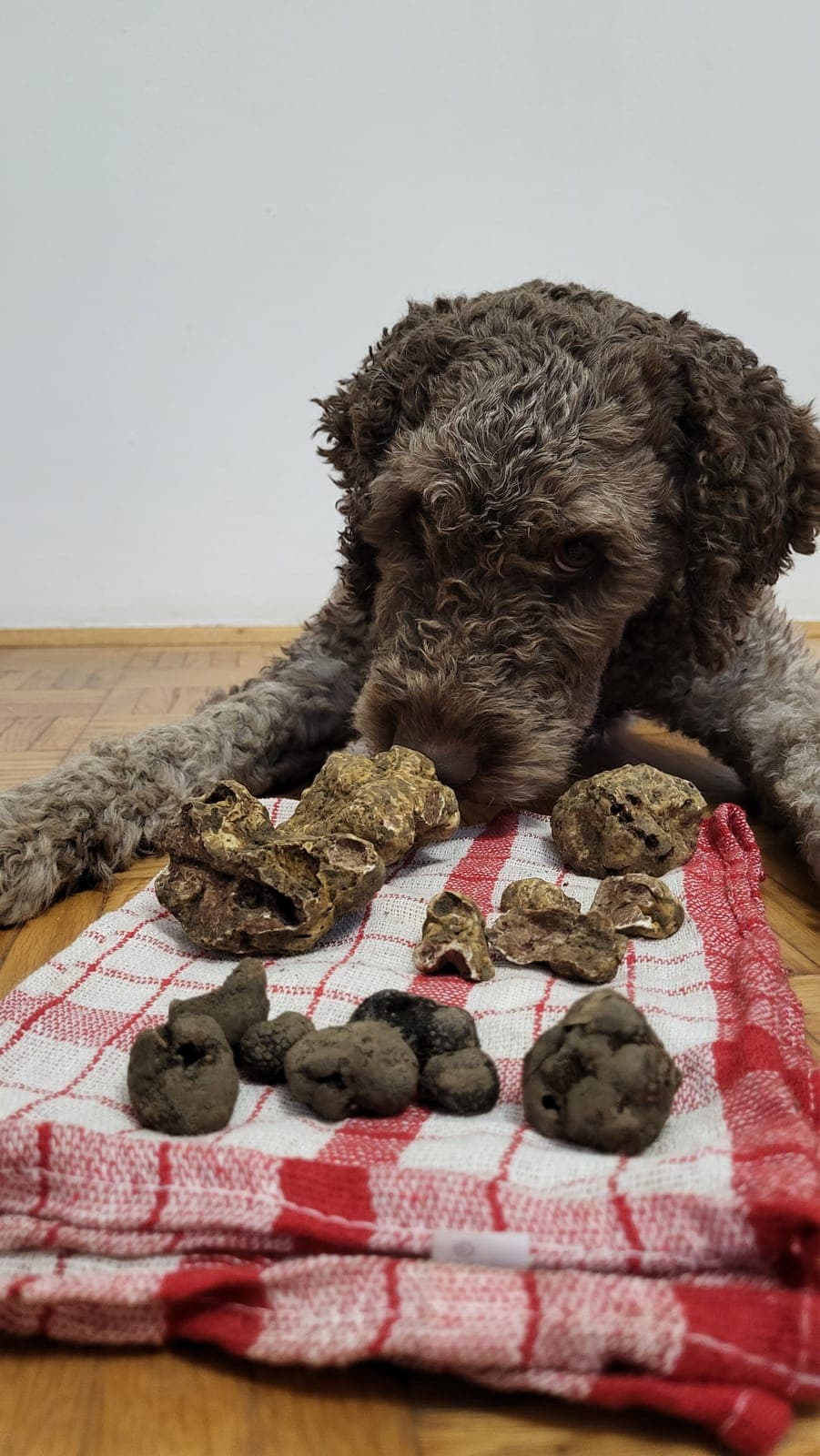
Training a dog for truffles is a process in which the dog learns to recognise and mark a specific scent. It is based on the dog's natural ability to use its nose, combined with proper guidance and rewarding.
In this guide we focus on the key steps of training so you can start working with your dog right away. In our truffle school these steps are worked out in detail and taught under expert guidance, since a blog cannot cover every situation and challenge from practice. Here you will get a clear picture of the process and a basis for an independent start, while expert guidance is recommended for deeper work and safer progress.
When to start training?
It is best to start training while the dog is a puppy, but it can also be carried out successfully with older dogs.
Can all breeds and mixed-breeds search for truffles? Find the answer in the article — Can any dog search for truffles?
The most important things are:
- that the dog is motivated
- that it has an interest in play or food
- that it can hold its attention for a short time
The goal of training is simple — the dog must connect the scent of truffles with a reward. That is the foundation of everything — without it there is no progress.
Step by step = training
1. Getting to know the scent
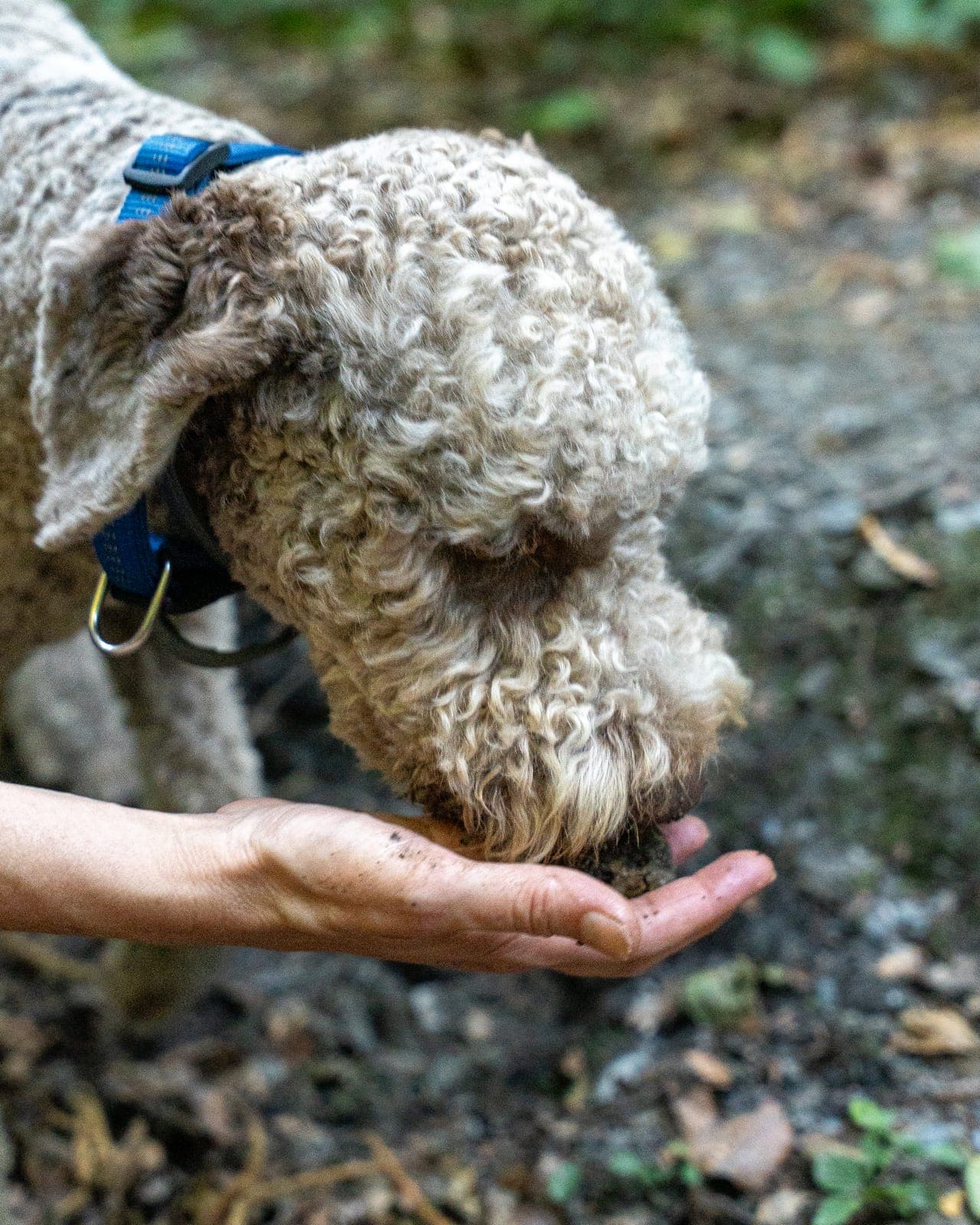
- use the scent of truffle (or a substitute such as oil, if you do not have a fresh truffle for training — we work with fresh truffle)
- offer it to the dog to sniff
- the moment it shows interest → reward it
- repeat several times a day in short intervals
2. Searching for the hidden scent
- hide the scent source in an object (a small bowl, box, etc.)
- use the dog's curiosity to check the object
- the moment it „finds” it → reward immediately
3. Working on marking / indication / retrieving
The dog must learn how to „mark” a find, and this can be:
Passive:
- sit
- stand
- lie down
- indicate passively with the nose
Active:
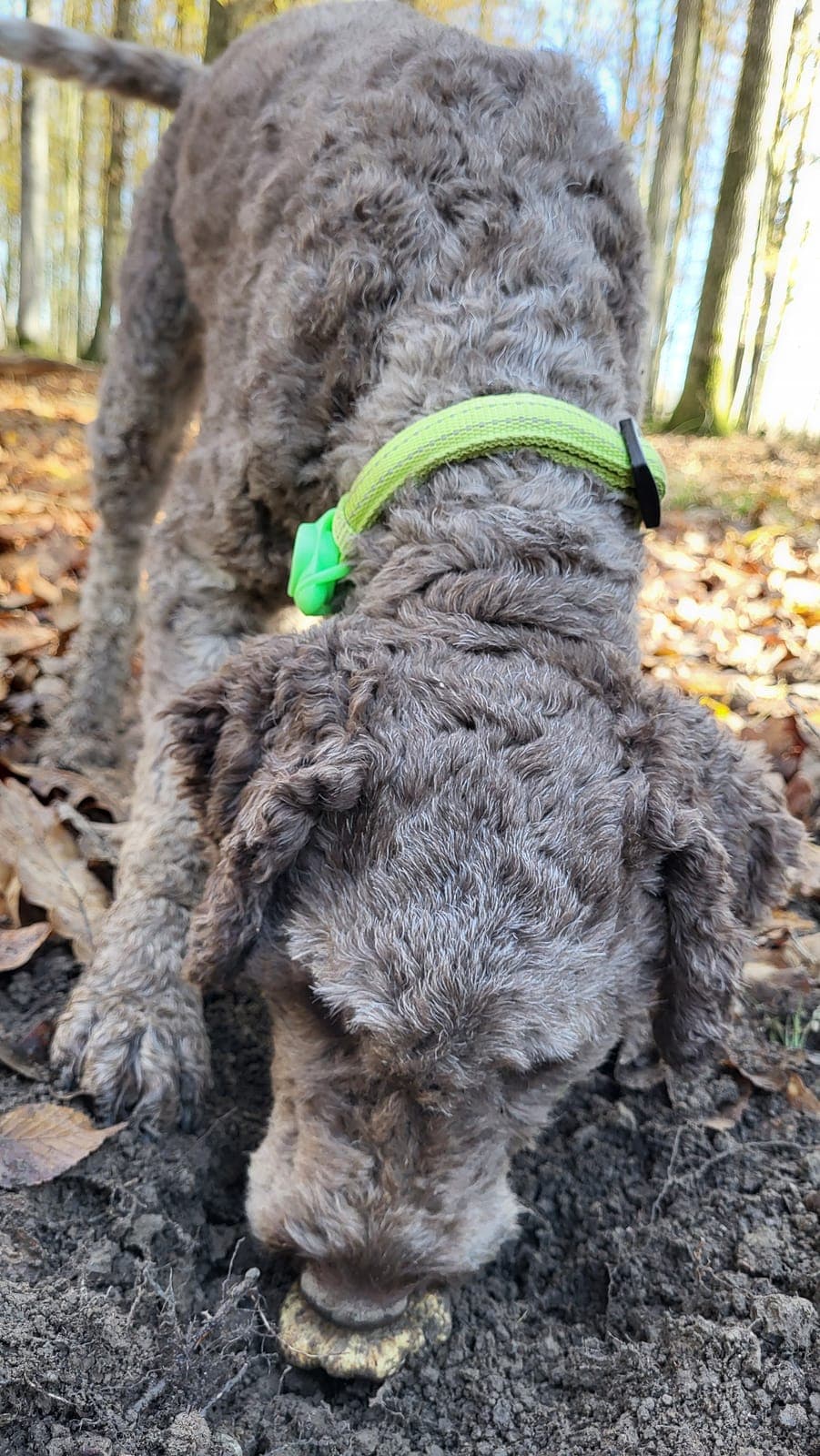
- dig
- bark
Retrieving / bringing the truffle:
- you can also choose to have the dog bring the truffle it digs up
Choose one behaviour and teach it consistently at the start.
Later you can teach additional behaviours for extra marking; for us, marking by lying down and with a passive nose has proven most practical, and on command additionally by digging, depending on the type of truffle being hunted.
Steps 2 and 3 can switch order, depending on what and why you want to work on.
4. Expanding the space
- expand the search area
- hide the scent in different places
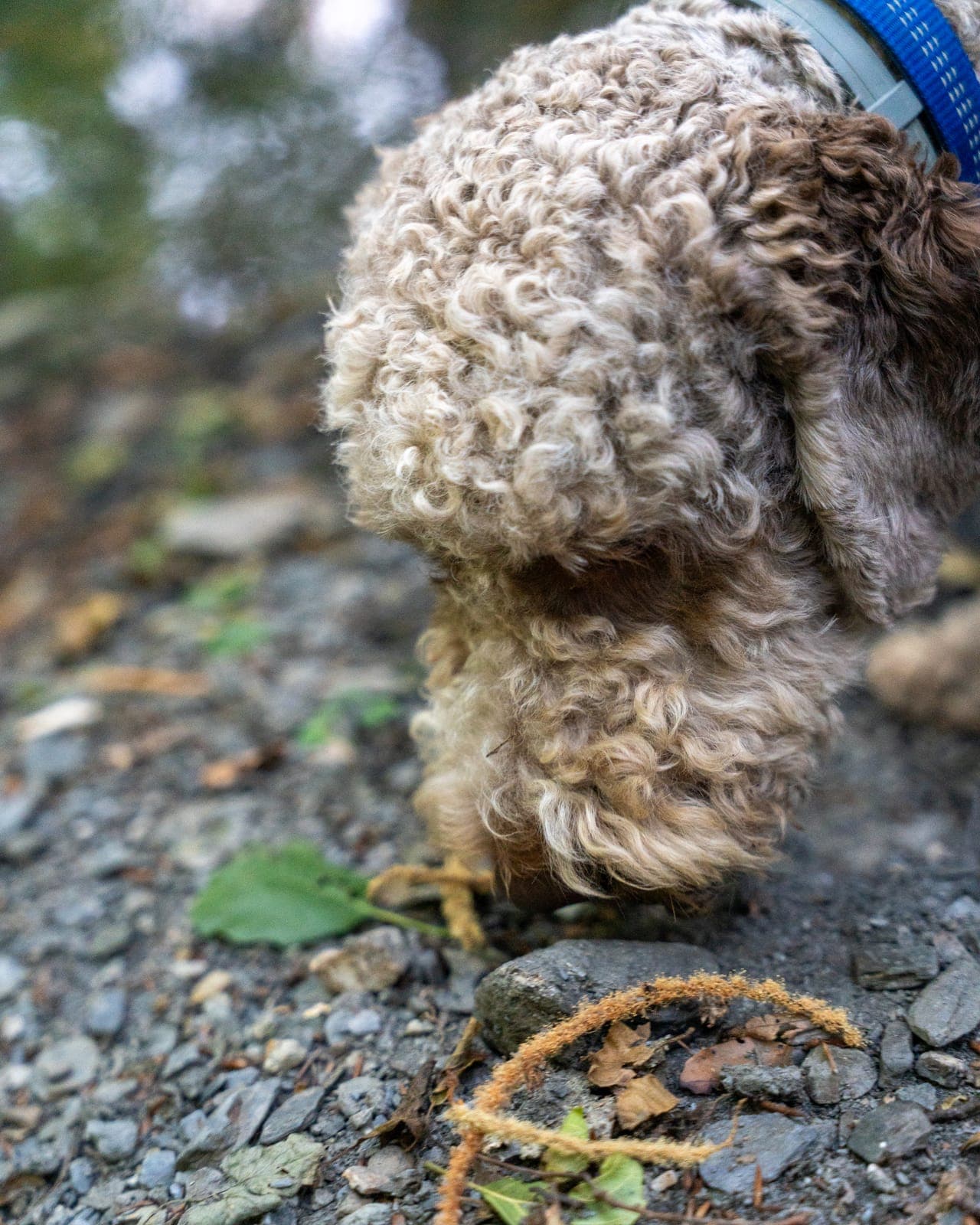
The goal is for the dog to use its nose, not its eyes.
5. Training outdoors
- start in a controlled outdoor space
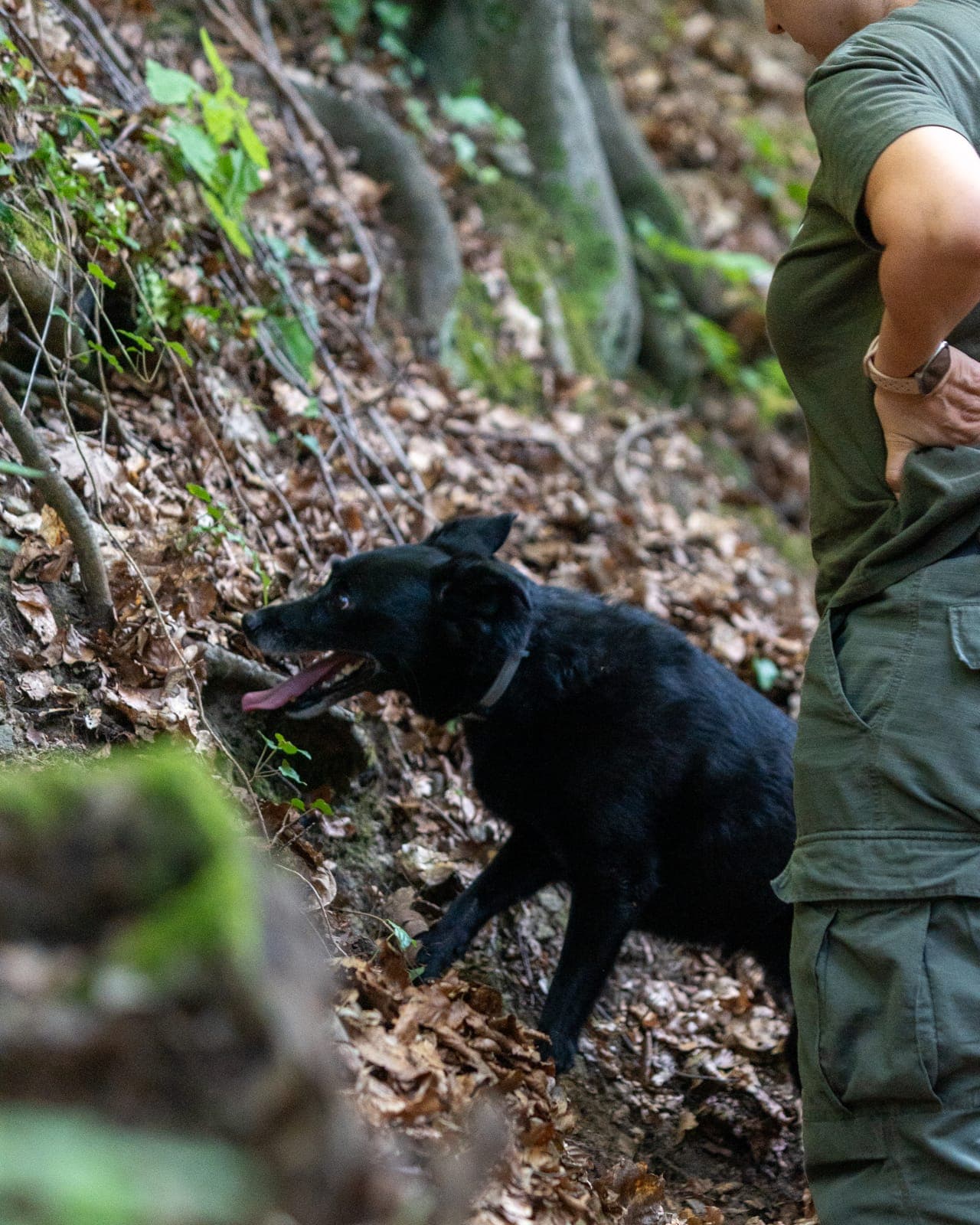
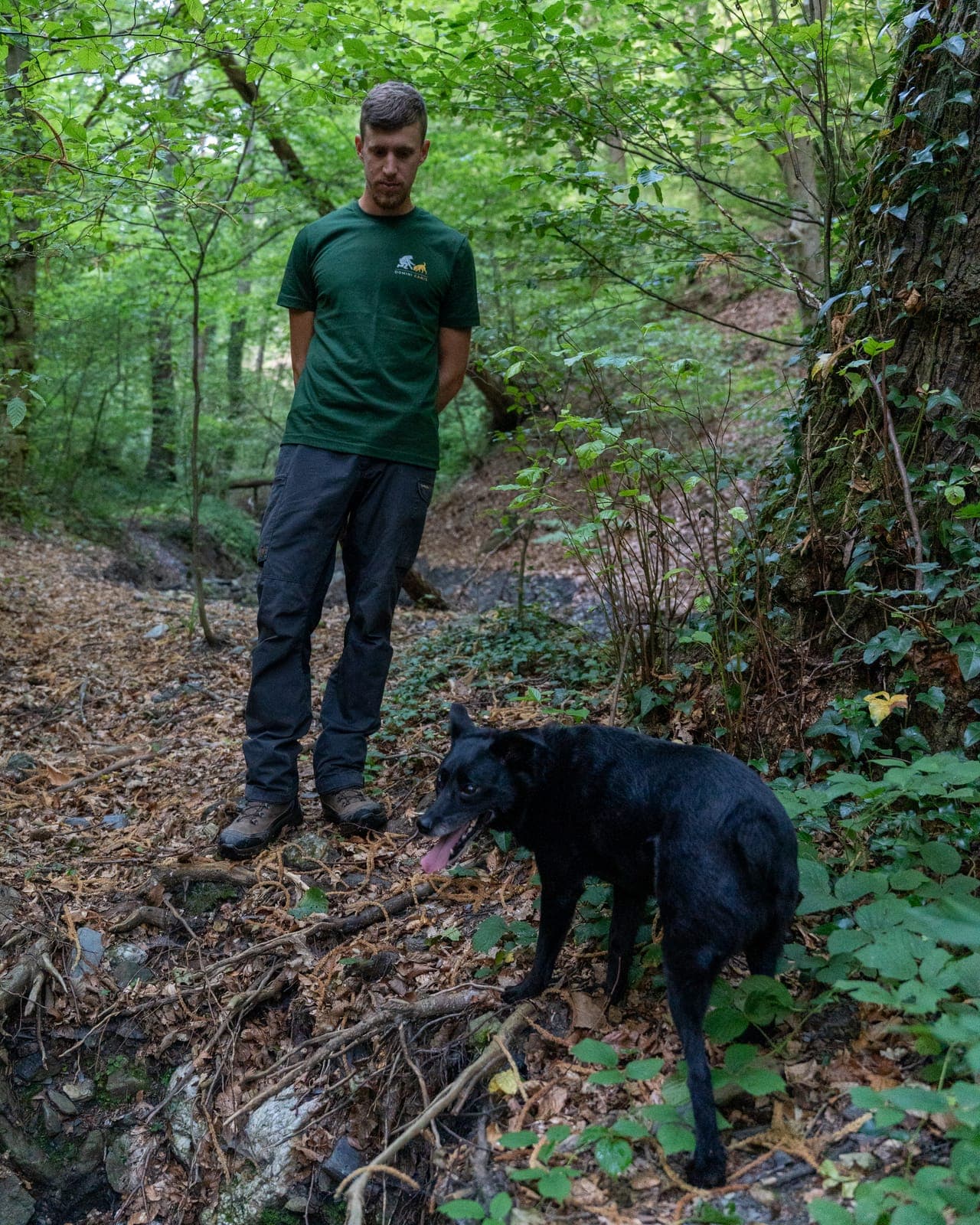
- gradually introduce the natural environment
This phase connects the training with real conditions.
Rewarding the dog
The reward must be:
- quick
- clear
- very valuable to the dog
- preferably the same (but valuable to the dog) after success
The most important rule: the dog must know exactly WHY it was rewarded.
Duration of training
Training should be:
- short (1–5 minutes)
- frequent (every day)
Several short training sessions give better results than one long one.
The most common mistakes in training
- Sessions that are too long — the dog loses concentration and motivation
- Skipping steps — the dog does not understand the task
- Inconsistent rewarding — the dog does not connect the scent and the reward
- Changing expectations — confuses the dog and slows progress
Tips for success
- work in a calm environment at the start
- always end the training on a positive note
- gradually increase the difficulty
- be patient and consistent
Training a dog for truffles is based on a simple principle: connecting scent and reward. With proper guidance and regular work, a dog can develop a reliable searching ability.
The most important thing is to stick to the basic steps and build the training gradually, without skipping phases.
Tips and stories