Tips and stories
How to choose a truffle dog – a guide for future truffle hunters
How to recognise a dog with potential for truffles — sense of smell, character, breed, motivation and choosing between a puppy and an adult dog.
Choosing a dog for truffle searching is one of the more important decisions for anyone who wants to seriously enter the world of truffle hunting. Many beginners immediately ask the same question – which breed is best and how to recognise a dog that will have potential for work?
The truth is that a successful truffle dog is not only a question of breed. Although genetics and natural predispositions play a big role, character, motivation, proper upbringing and quality training are equally important.
Below we bring you the most important things to pay attention to when choosing a truffle dog.
1. The sense of smell matters – but it is not the only thing
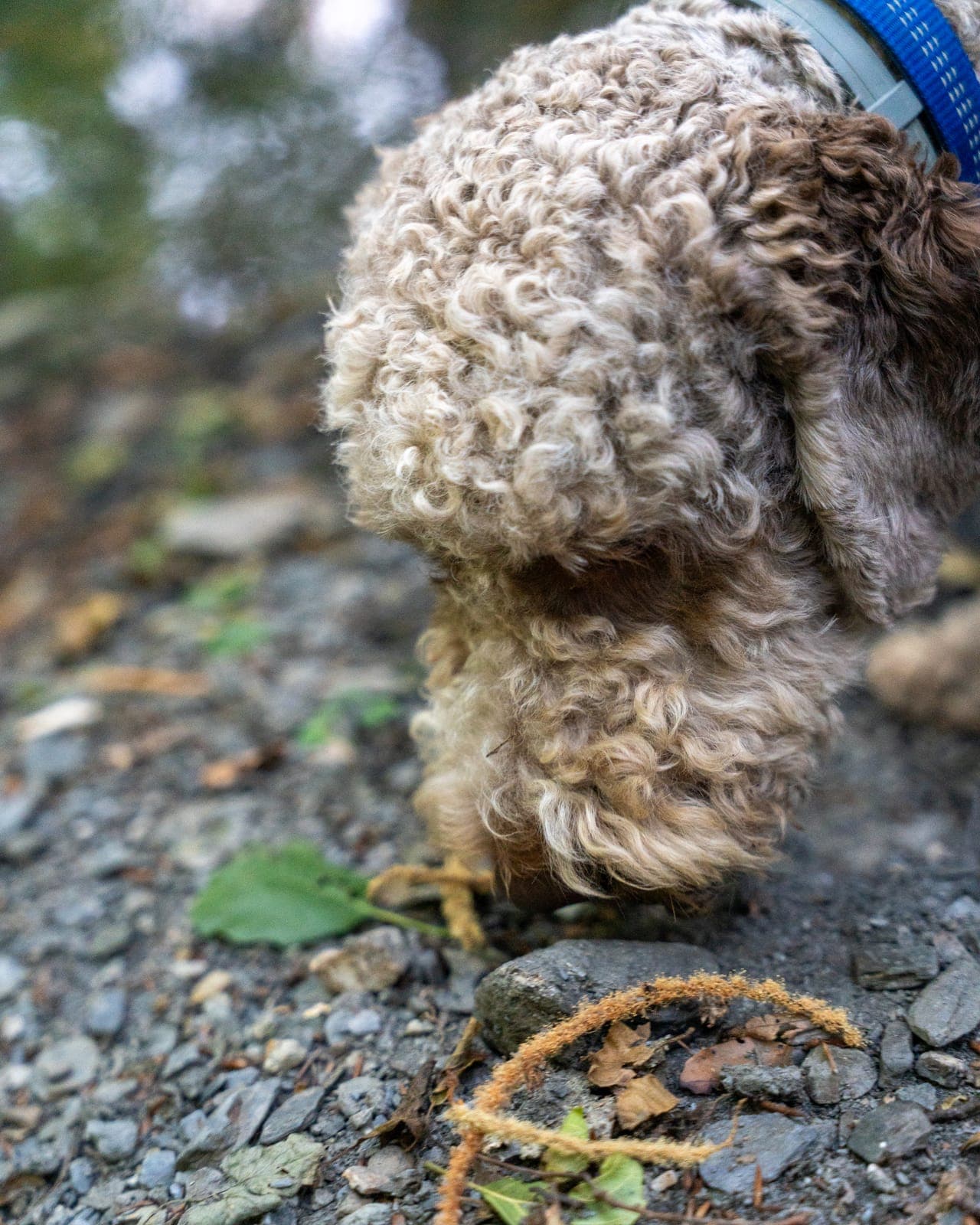
It is often thought that a „good nose” is enough for a truffle dog. The truth is that almost all dogs have an excellent sense of smell, but the difference is not only in scenting ability, but in the desire and the way the dog uses its nose.
A good truffle dog must:
- have an interest in searching for a scent
- be persistent in work
- hold its concentration
- have the desire to reach the source of the scent
- not run off after game
Because of this, the sense of smell alone is not enough without motivation and a willingness to work.
2. The dog's character is often more important than the breed
Although certain breeds have better predispositions for scent work, the character of the individual dog is often decisive.
When choosing a puppy or an adult dog, it is important to look for:
- curiosity
- self-confidence
- a stable temperament
- a desire to explore
- a readiness to cooperate with people
An overly timid or uninterested dog will usually develop quality work in the field more slowly.
3. The breed – which to choose?
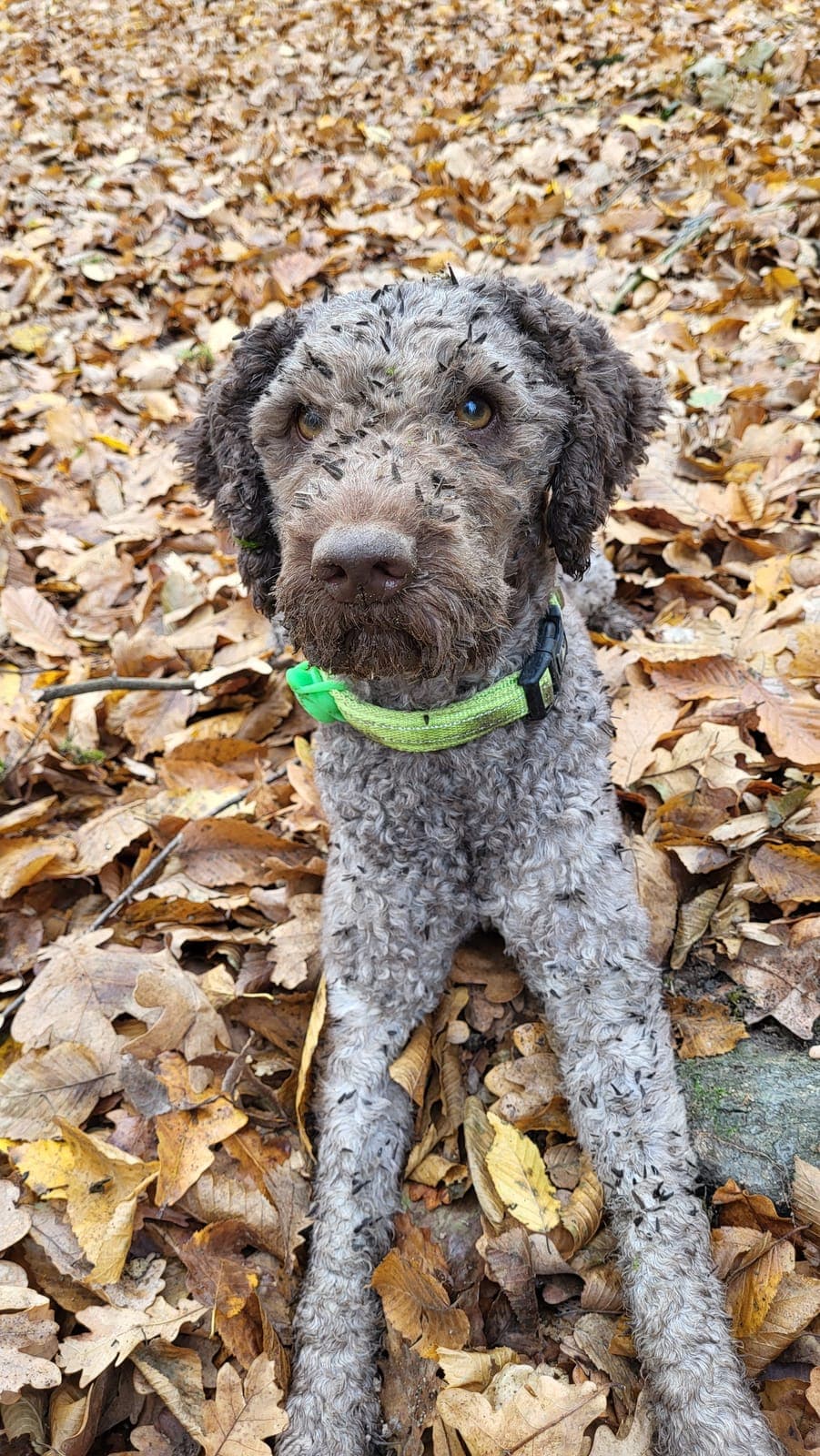
Every dog can search for truffles, but some carry greater potential for work in the field. There are several breeds that can successfully search for truffles, but some stand out because of their natural predispositions. In our terrain and neighbouring countries you can most often find the following breeds:
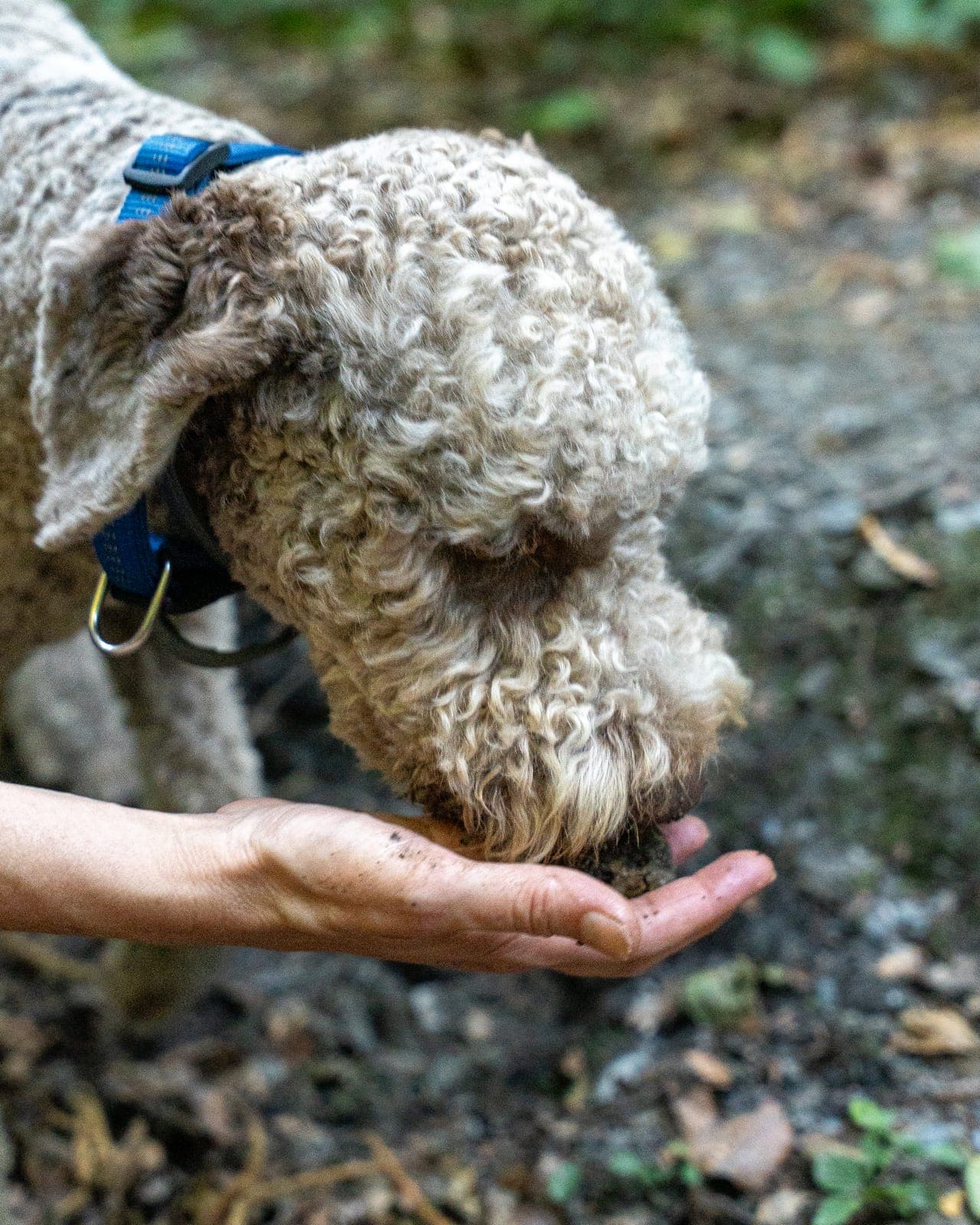
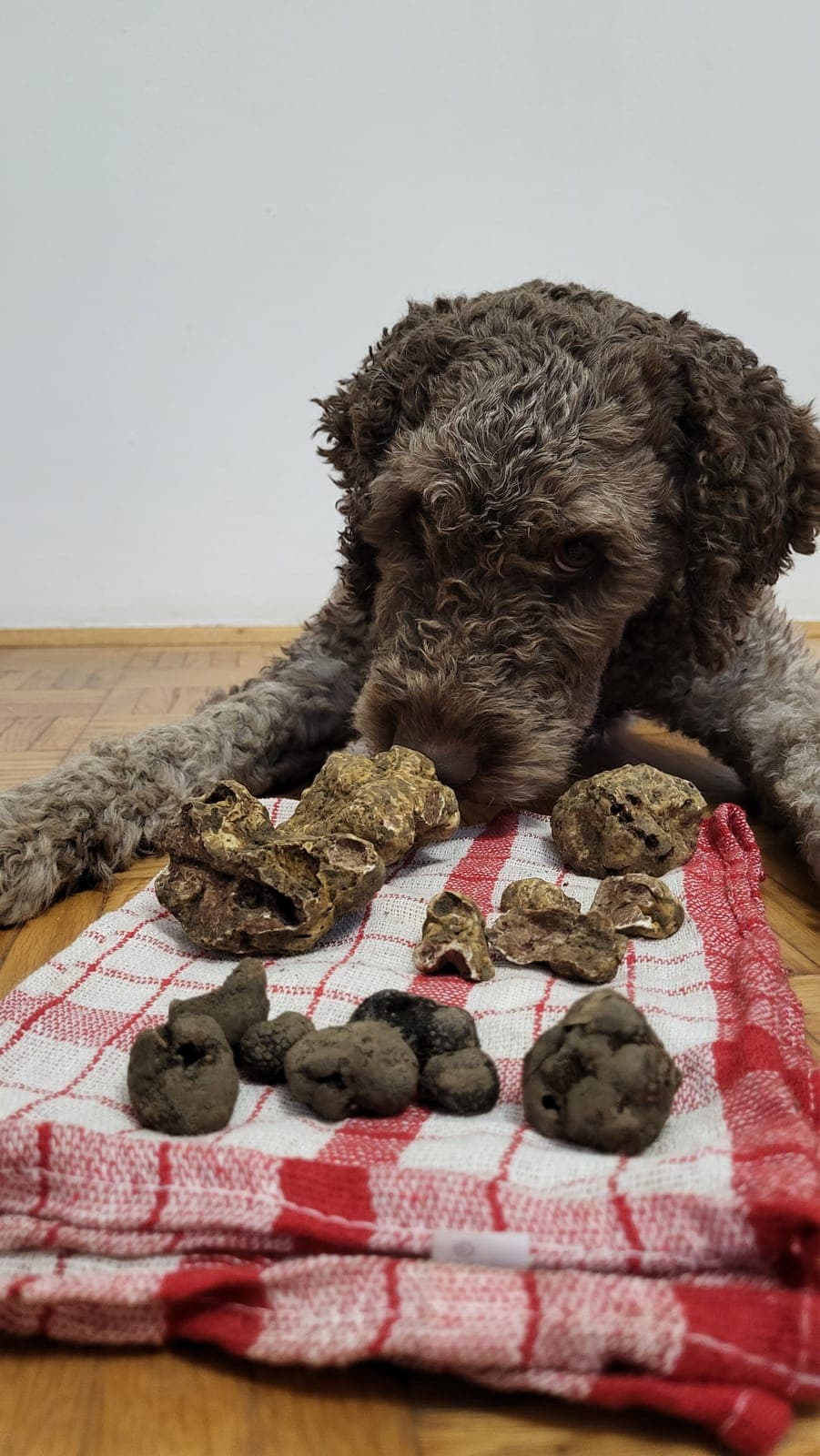
- Lagotto Romagnolo – the only breed whose FCI breed description states that its purpose is truffle hunting
- Labradors
- Spaniels
- Pointers
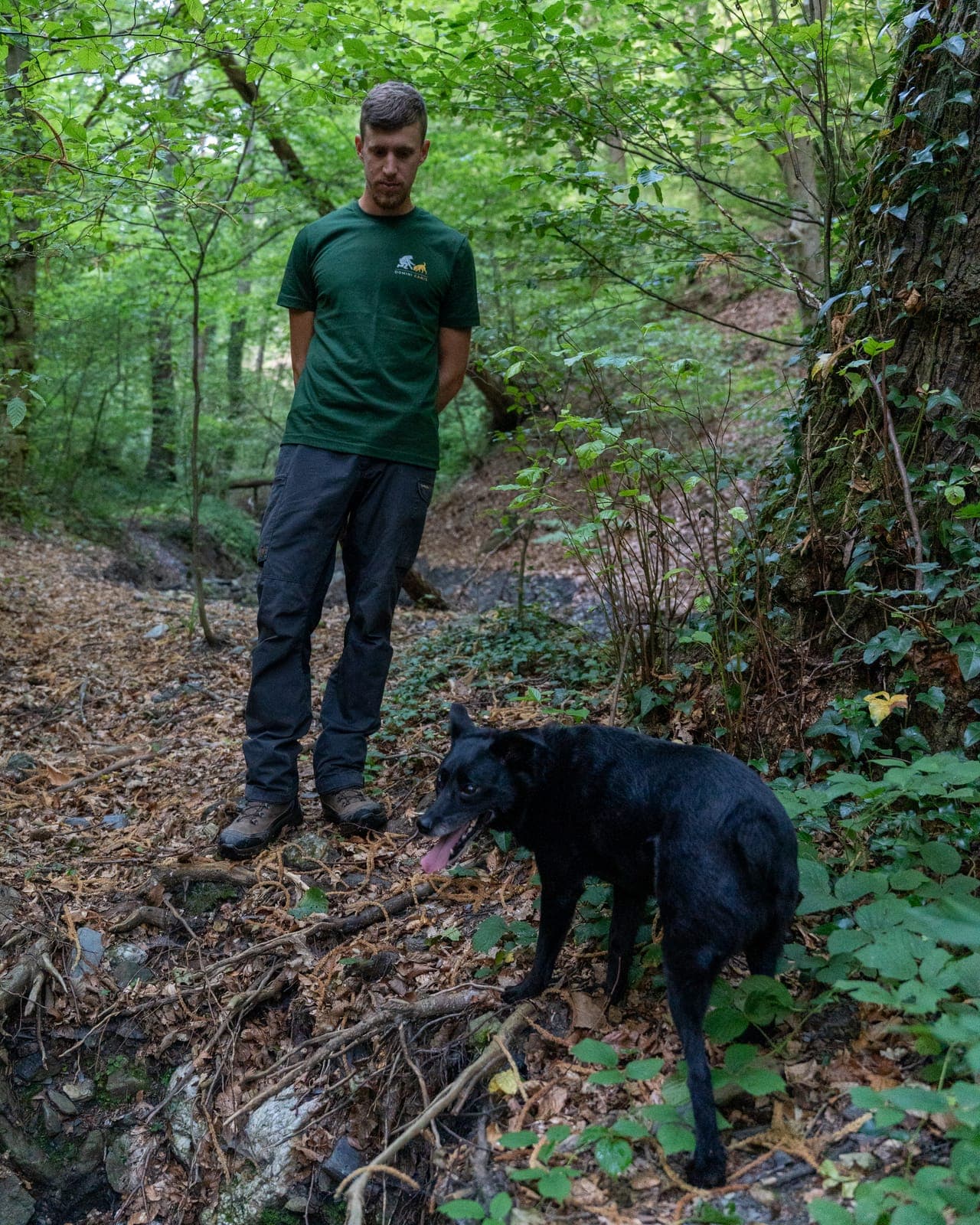
- mixed-breeds
- Belgian Shepherd Malinois – we would not recommend it to inexperienced handlers
Their advantages include:
- an exceptional sense of smell
- focus
- a great desire to work
- ease of training
- an excellent bond with the handler
- strong motivation
- great working energy
However, with some dogs a pronounced hunting drive can pose an additional challenge during work in the forest, especially for less experienced handlers. Lagottos and some mixed-breeds more often have a weaker hunting drive, although of course it always comes down to specific individuals, and there are Lagottos that are extremely distracted by game, as well as German pointers that are not distracted at all.
4. Motivation is the key to success
One of the most important traits of a truffle dog is motivation. The motivation to find truffles must be stronger than the motivation for birds, game, mice and other scents in the natural habitat.
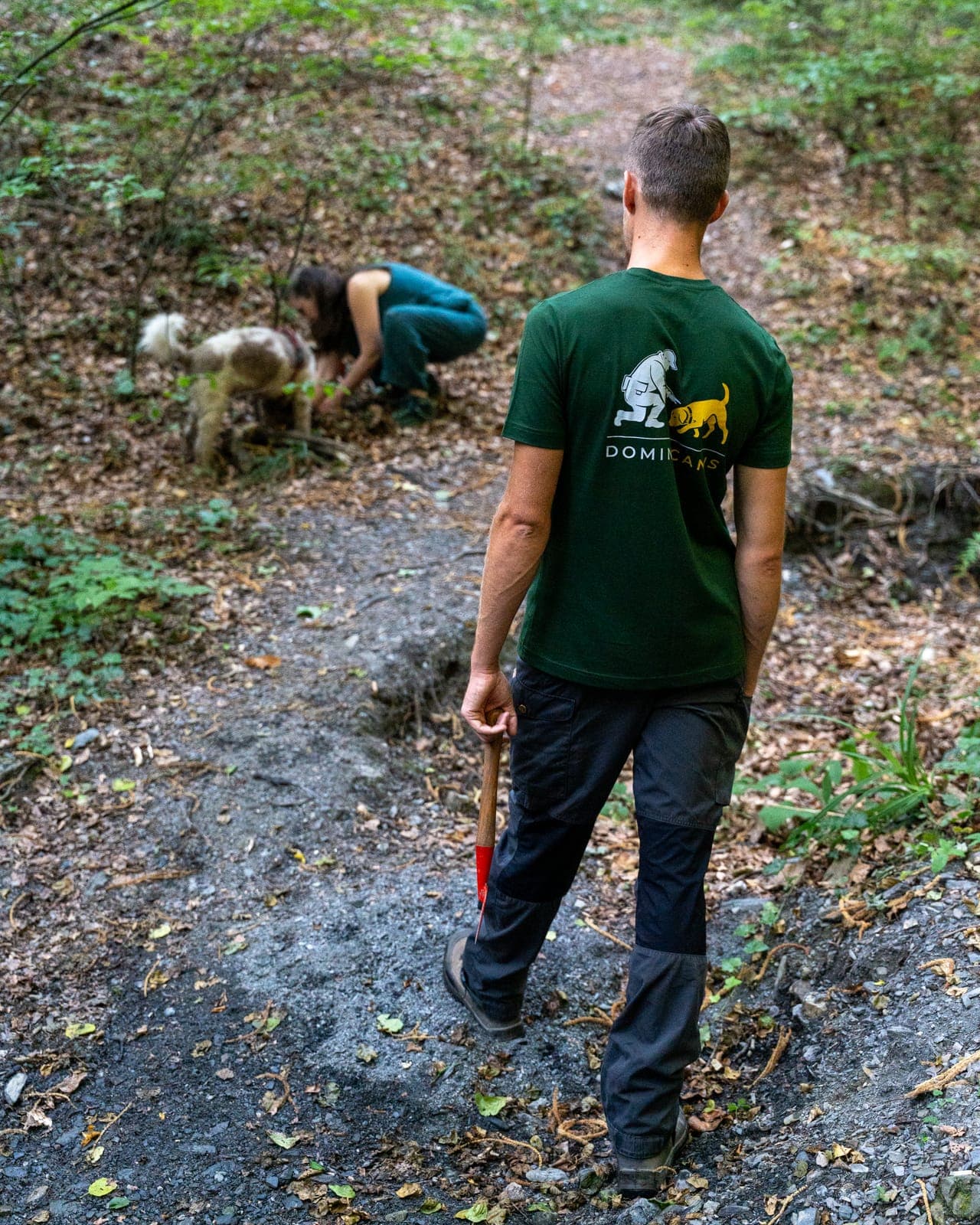
5. A puppy or an adult dog?
This is a common question among future truffle hunters.
Advantages of a puppy:
- raising it from the start
- building a relationship
- adapting it to your own way of working
The downside is the longer wait until serious work.
Advantages of an adult dog:
- easier assessment of character
- a faster start to training
- sometimes already developed working and life habits
However, a good assessment of previous experience and temperament is important.
6. A good dog is not enough without good training
One of the biggest mistakes is expecting the dog to become a successful truffle hunter on its own. Even a dog with top predispositions needs:
- properly guided training
- consistency
- motivation
- gradual learning
- experience of working in the field
Quality training develops the potential the dog already carries within it.
7. Choose a dog that also suits your life
A truffle dog is not only a working partner – it is also part of everyday life.
Before deciding, consider:
- how much time you have for training
- how active you are
- whether you want a dog purely for work or also a family dog
- whether the breed's temperament suits you
- whether it bothers you if the dog sheds
The best choice is a dog you will enjoy both in work and in everyday life.
Choosing a truffle dog is not a race for the „best nose”, but a search for the right partner.
A good truffle dog is a combination of:
- natural predispositions
- a stable character
- motivation
- a desire to cooperate
- quality training
With the right choice and patient work, the dog becomes not just a helper in truffle searching, but a partner you trust and with whom you share special experiences in nature.
Tips and stories